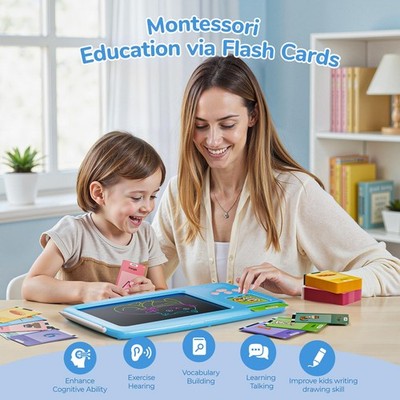
Some days you can sit and go through every card together. Some days you can’t. This one keeps talking, teaching, and listening either way — so the moments you can’t be there still count.
Get Yours Before They Grow Out of This Stage →
What Makes This Different
• Hear It, Say It, Learn It — a talking flashcard reader that guides your child through words and pictures, no adult narration required
• A Screen That Isn’t a Screen — an erasable LCD tablet for writing and drawing, with no videos and nothing to passively watch
• Independent, Not Isolating — built for a child to explore at their own pace, without needing you to sit through every minute
• New Words to Discover, Again and Again — a full range of categories that keeps them coming back, not a single-use novelty
• A Companion, Not a Gadget — a friendly, child-sized design made to feel like theirs, not another piece of ‘tech’ in the house
There’s the version of parenting you imagined — sitting together, going through books, answering every “why” with all the time in the world.
And then there’s today. The pot on the stove. The message you haven’t replied to. One child crying while the other wants your attention. The quiet ten minutes you finally get, gone before you notice.
It’s not that you don’t want to teach them, read with them, go through their colors and shapes one more time. It’s that some days, there just isn’t a version of you with enough hours left to do it the way you pictured.
So you reach for what’s nearby. And somewhere in the back of your mind, you wonder if there’s a better way to fill that time — one that doesn’t ask more of you than you have to give right now.
There is. And it starts with something small enough to fit in their hands.
It’s 6:40pm. The rice is on. Her son, three years old and full of questions, is tugging at her wrapper, asking why the sky turns orange sometimes.
She wants to answer him properly — to sit down and really talk about it, the way her own mother used to, back when evenings felt slower.
But the rice is on. There’s a work message she hasn’t replied to. And her daughter just woke from her nap, crying for a reason no one under four can explain.
Adaeze doesn’t need to get everything right. But some nights, after the children are finally asleep, she lies awake wondering if she’s giving them enough — not toys, not things, just her. Her time. Her attention. The small moments she suspects matter more than anything else she’ll ever buy them.
She remembers being small herself, sitting beside her own father while he named things around the compound — that tree, that bird, that cloud — and how it felt to have someone’s full attention, even for five minutes.
She wants that for her children. Not a perfect childhood. Just a present one.
She doesn’t know it yet, but there’s a way to hold onto that feeling — even on the nights the rice is on, the phone won’t stop buzzing, and there just isn’t enough of her to go around.
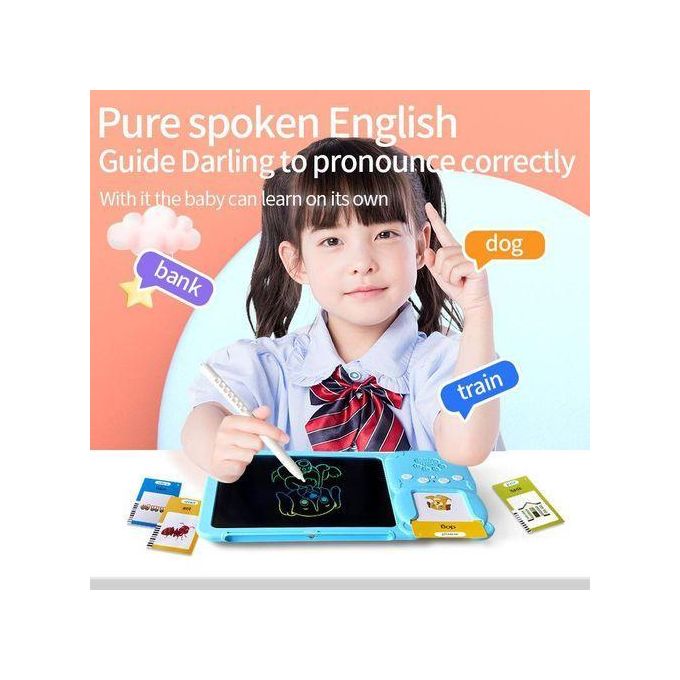
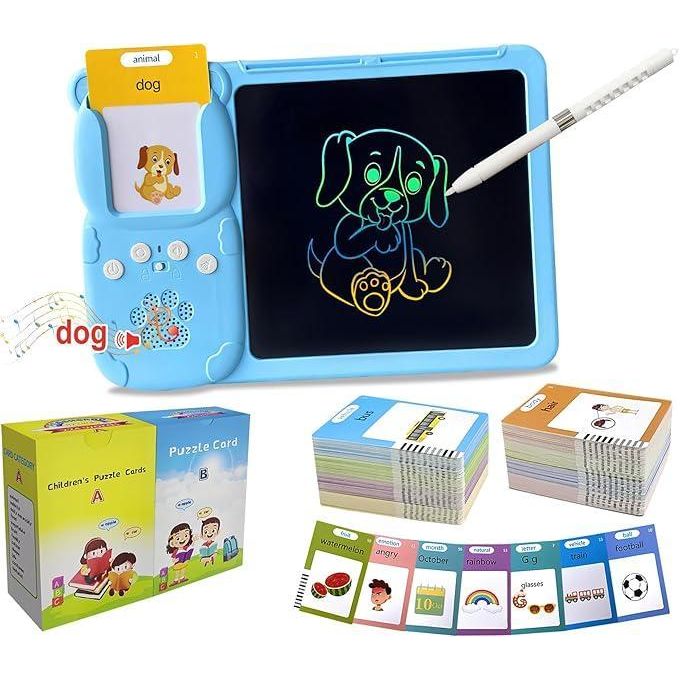
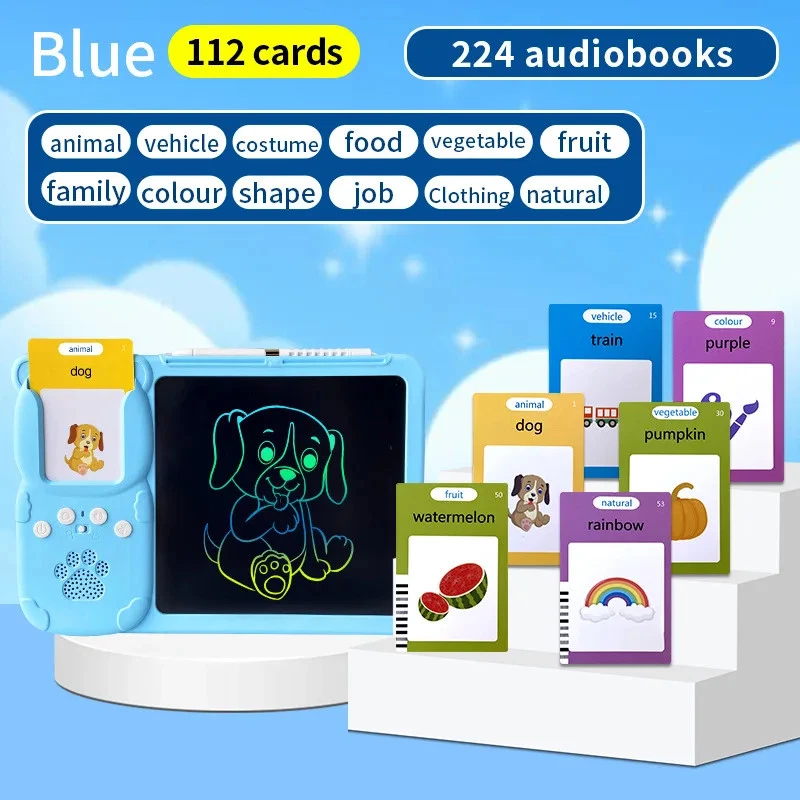
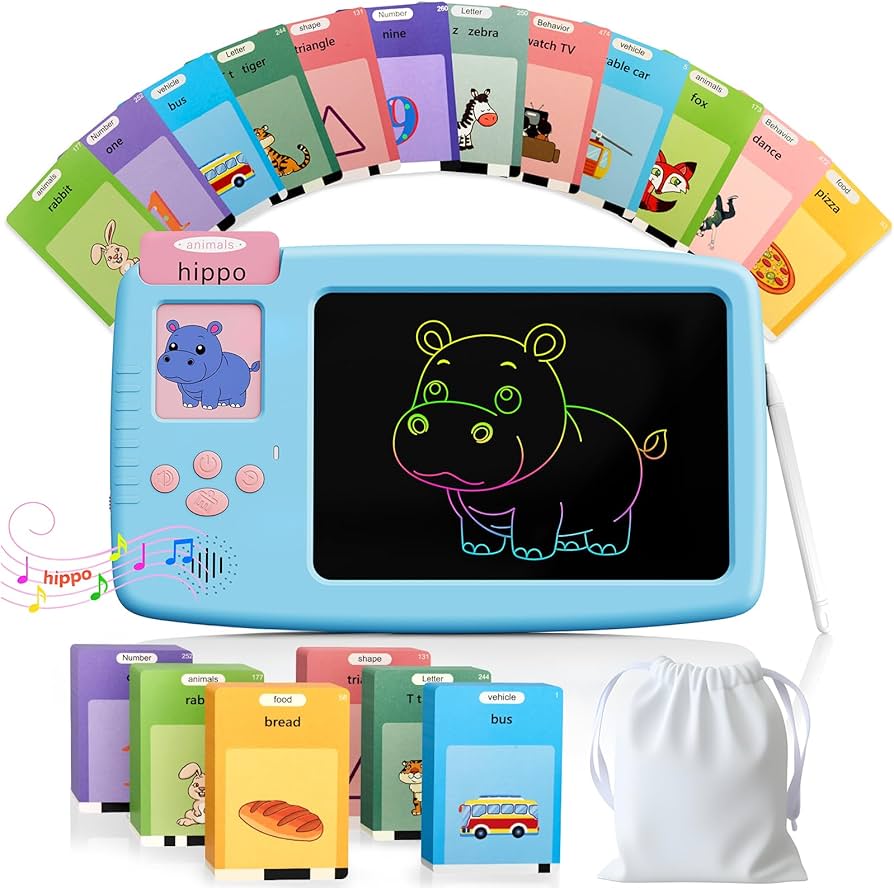
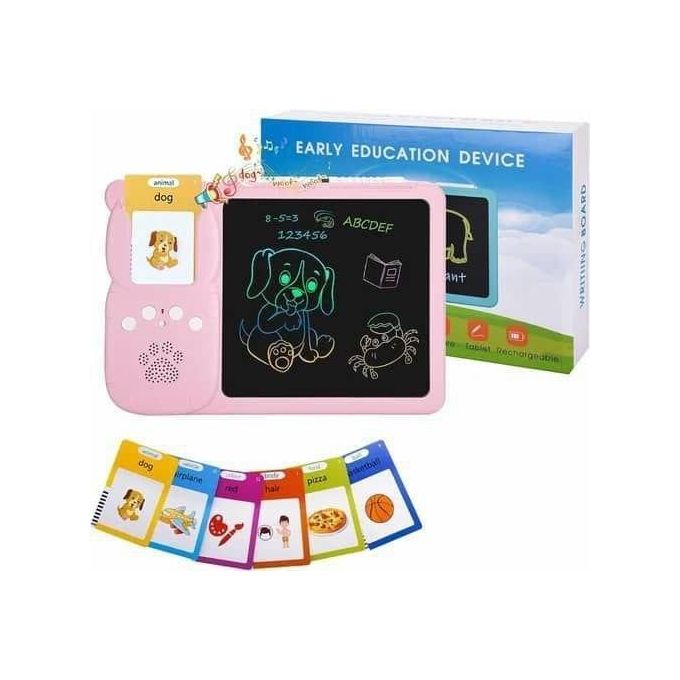
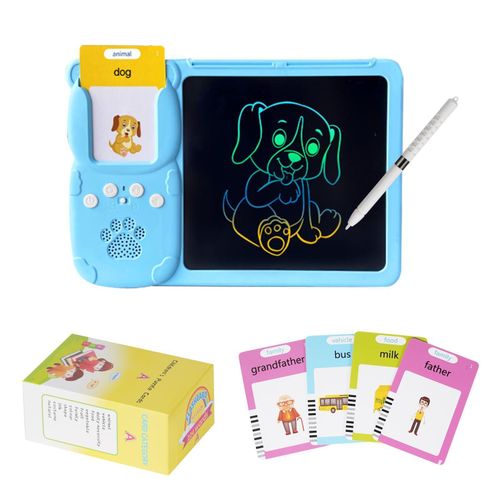
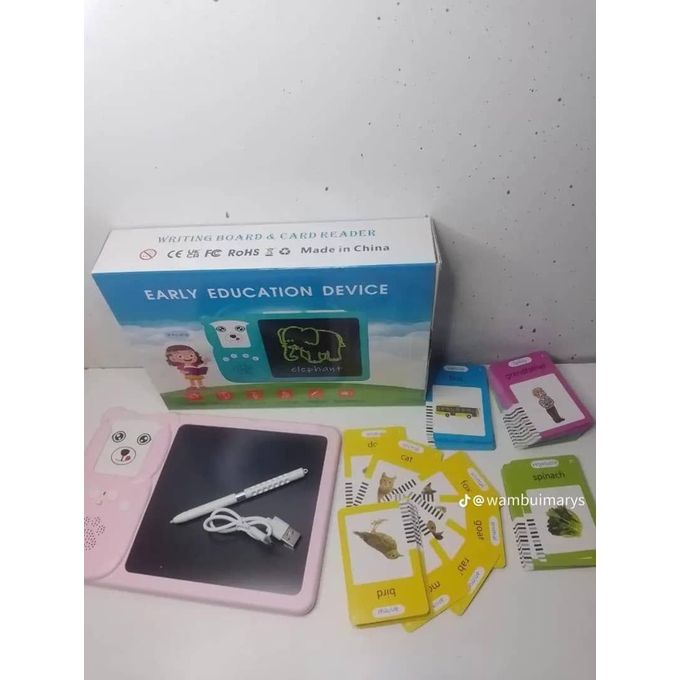
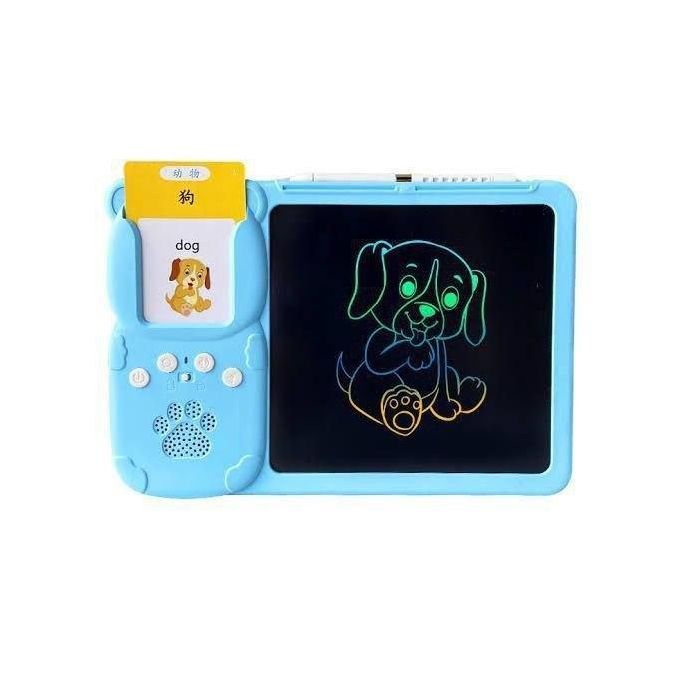
This is the Interactive Talking Flashcard Reader + LCD Writing Tablet Learning Set — and it was built for exactly the kind of evening Adaeze was having.
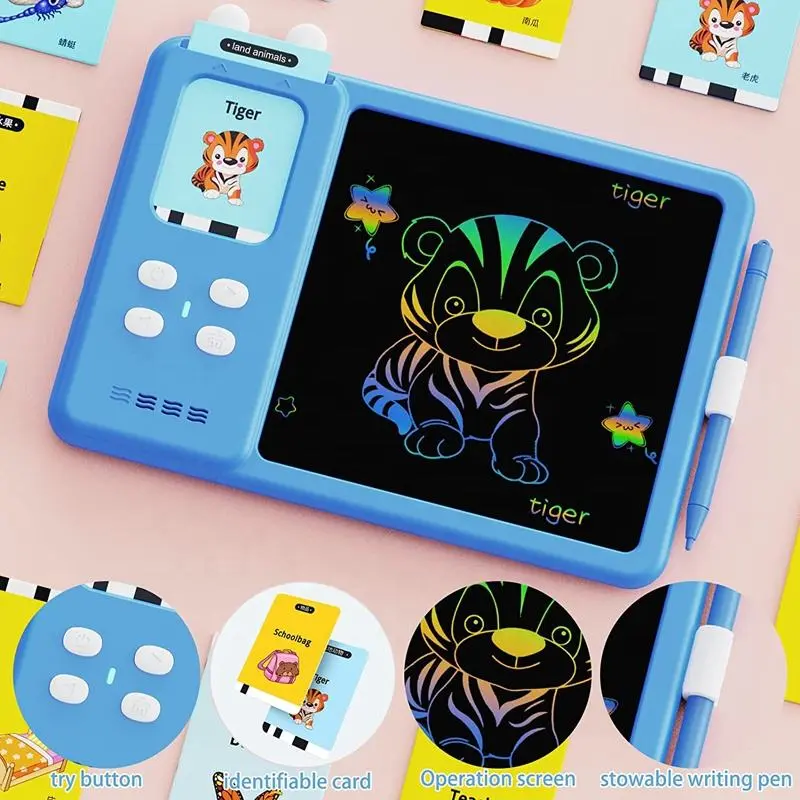
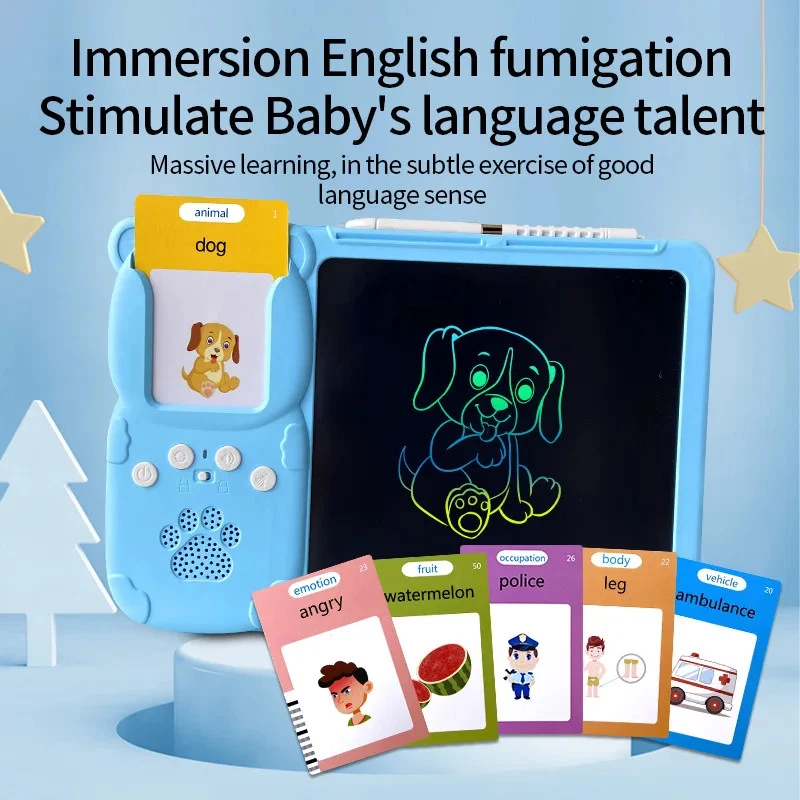
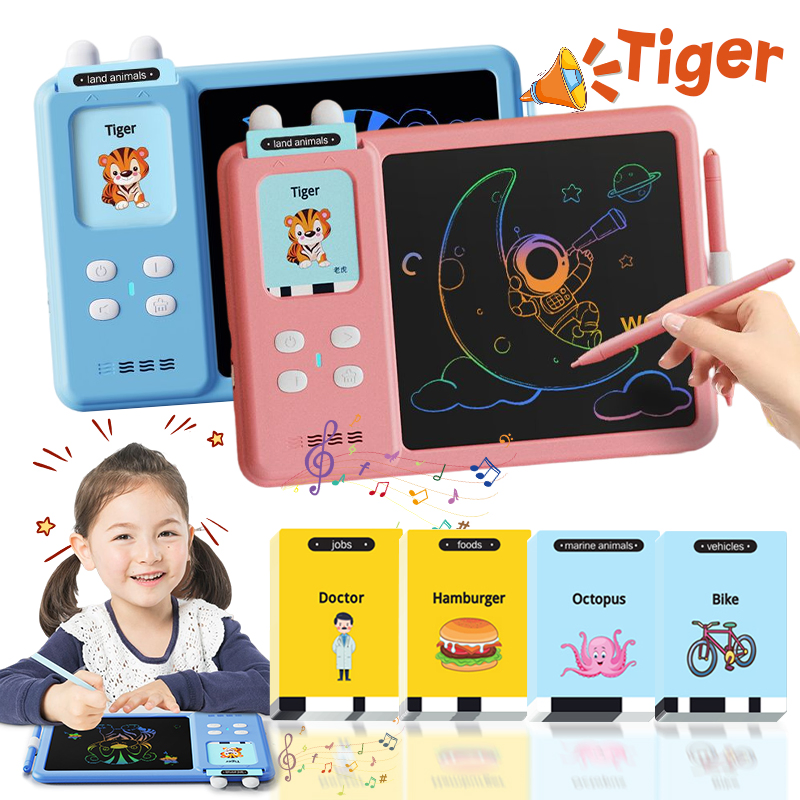
Slide a card in, and it responds — the word, the picture, the sound, all narrated for your child, with no adult needing to sit and read every card aloud. They press, they listen, they repeat, they discover. Again and again, at their own pace, in their own time.
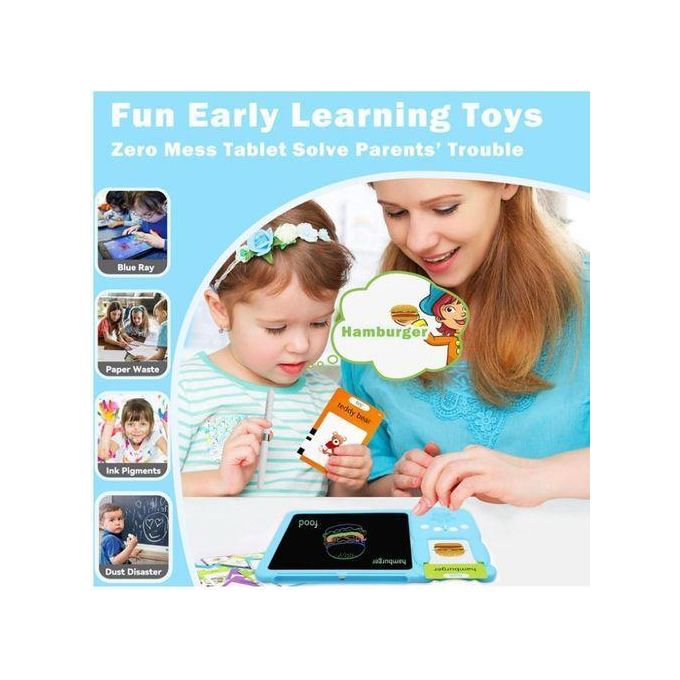
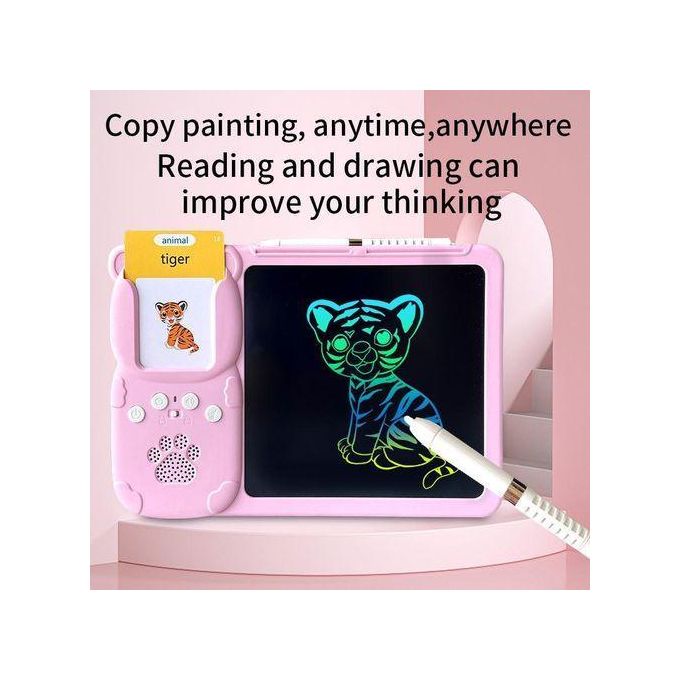
Turn to the built-in screen, and it becomes a space just for them to trace, write, and draw — nothing permanent, nothing wasted. One touch clears it, so there’s never a wrong attempt, only another chance to try.
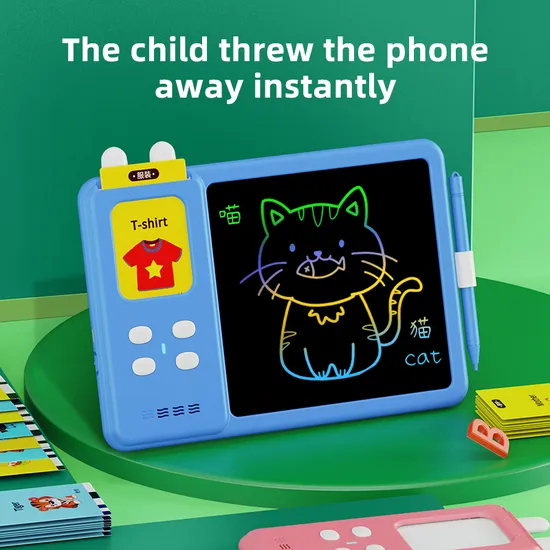
It isn’t a phone. It isn’t a screen playing videos while your child watches quietly from the couch. It’s something they hold, press, and lead themselves through — listening, speaking, recognizing, and writing, all folded into one small companion made just for them.
This is what showing up can look like, even on the busiest days. Not another toy abandoned within a week — a small, steady presence that keeps the learning going, whether you’re sitting right beside them or stirring the pot three feet away.
And what it actually gives your family, day to day, is worth taking a closer look at.
Your child stops needing you to start learning. They pick it up, press a card, and something happens — a word, a sound, an answer — and that small loop of cause and effect is enough to pull them back in, again and again.
There’s no wrong answer here, and no one watching to correct them. That absence of pressure is exactly what lets a shy or hesitant child speak up, try again, and keep going without flinching.
And because nothing on the screen is permanent, mistakes stop meaning anything. A wobbly letter, a scribble that didn’t come out right — one touch and it’s gone, and they’re already trying again. That’s a child quietly learning that trying again is normal, not something to be embarrassed about.
You stop having to choose between “productive” and “peaceful.” For once, the thing keeping your child occupied is also the thing you’d choose for them anyway.
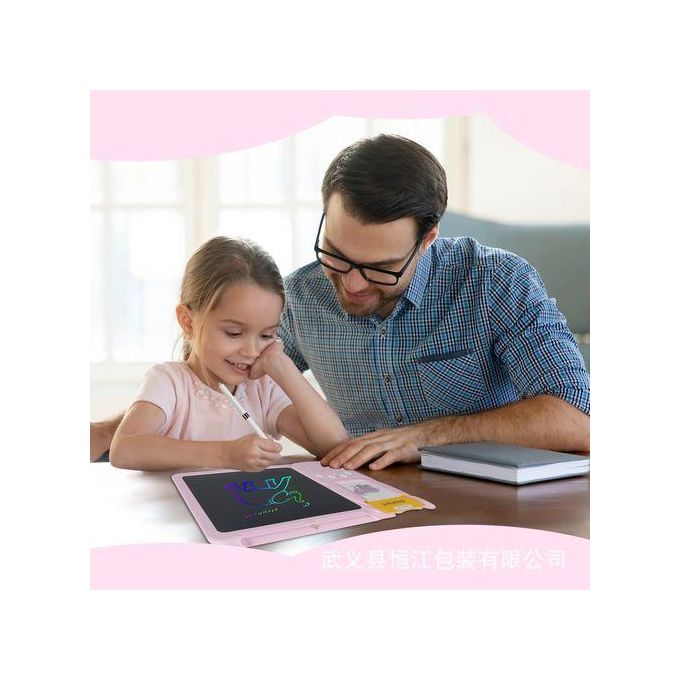
And you get to be part of it without carrying all of it. Sit with them for five minutes and go through a few cards together, or step away and trust it’s still doing something worthwhile without you standing over it. Either way, nothing about this asks more of you than you have to give right now.
You want to feel the specific relief of watching your child fully absorbed in something — quiet, focused, occasionally talking to themselves — and knowing you didn’t have to hand over a phone to get there.
Your child, meanwhile, feels capable. You’ll see it in the small things: the little grin after a card is named correctly, the pride in showing you a drawing before wiping it clean and starting again. That’s “I did that,” on repeat, entirely on their own terms.
It’s there on a slow Saturday morning when everyone’s still in pajamas and nobody wants to leave the house. It’s there in the back seat on a long drive, keeping small hands busy without a screen full of cartoons. It’s there when cousins visit and the older kids want their own thing to do. It’s there on a rainy afternoon when outside isn’t an option.
And it’s there, quietly, on an ordinary Tuesday after school when nothing special is happening at all — which, in the end, is where most of parenting actually lives.
Most gifts get played with for a week and forgotten in a corner. This one keeps giving a reason to be picked up — which means whoever gives it doesn’t just look thoughtful on the day, they stay remembered every time it’s reached for again.
It works for a birthday, a Christmas morning, a baby shower where everyone else is buying tiny clothes the baby will outgrow in a month. It works for a grandparent who wants to give something that means more than another toy, and for the quiet, unglamorous moment of school resumption, when a small head start feels like exactly the right thing to hand over.
Because in the end, a good gift isn’t the one that gets the biggest reaction on the day. It’s the one still being reached for, weeks later, without anyone having to ask.

This is the heart of the whole set. Slide any card in, and it reads the word aloud, clearly and correctly, every single time — no adult needing to be free to narrate. Children get something that feels less like a lesson and more like a conversation that always answers back. Parents get consistency: the same correct pronunciation, whether you’re in the room or not.
That’s 224 sides of words and pictures — enough range that this doesn’t turn into a five-card habit that’s exhausted by the weekend. A bigger deck means a child keeps discovering something new instead of memorizing the same five answers and moving on.
Every one of those 224 words is something your child will actually run into — in books, in conversation, eventually in early reading. Familiarity built up gradually, without pressure, may support an easier transition when formal reading starts.
No mumbling, no rushing — every word comes through clearly enough for a toddler to actually hear and repeat. Children enjoy repeating what they hear, and clear audio is what makes that repetition satisfying instead of frustrating.
Animals, colors, shapes, vehicles, family, food, and more — a child’s curiosity doesn’t stay in one lane, and neither does this.
Built right into the same device, the erasable screen turns this from a listening tool into a full hands-on learning space — writing and drawing use a completely different set of skills than listening and speaking, and having both in one device means neither gets left out.
Nothing written here is permanent, which means nothing here ever runs out. No replacement notebooks, no drawer of half-used exercise books — just unlimited chances to write, erase, and try again.
Sized and shaped for small hands, the included stylus is a real writing tool that’s actually theirs — not a pen borrowed from your bag and immediately lost.
Charge it with a standard USB cable, and it’s ready again — no scrambling for the right batteries at the worst possible moment.
Small enough to toss in a bag and bring along, wherever the day happens to go — car rides, waiting rooms, a weekend at a relative’s house.
Big, simple buttons and an obvious “insert card here” design mean your child can operate this without help, right from the start.
Built to hold up to the way young children actually play with things — which is to say, not gently.
Designed with a young child’s safety in mind, from the housing to the stylus tip — often the very first thing a parent checks before anything else.
When playtime’s over, everything tucks away as one tidy piece — no scattered cards to gather up, no loose stylus rolling under the sofa.
Your child chooses any card from the deck — animals, colors, shapes, whatever catches their eye. It’s their pick, their pace, their session.
The card slides into the reader, and it answers right back with the word, spoken clearly. No buttons to figure out — just insert and go.
Your child hears the word, and the moment naturally invites them to say it back — no pressure at all if they don’t, the first time.
Flip to the built-in screen to trace, draw, or scribble — then wipe it clean with one touch and start again. No fear of getting it wrong.
None of this needs a lesson plan, a set schedule, or a parent sitting through every round. It’s simply what happens when a child is handed something they enjoy holding — a few minutes here, a few minutes there, quietly building into a steady habit of listening, speaking, and creating, all wrapped in play.
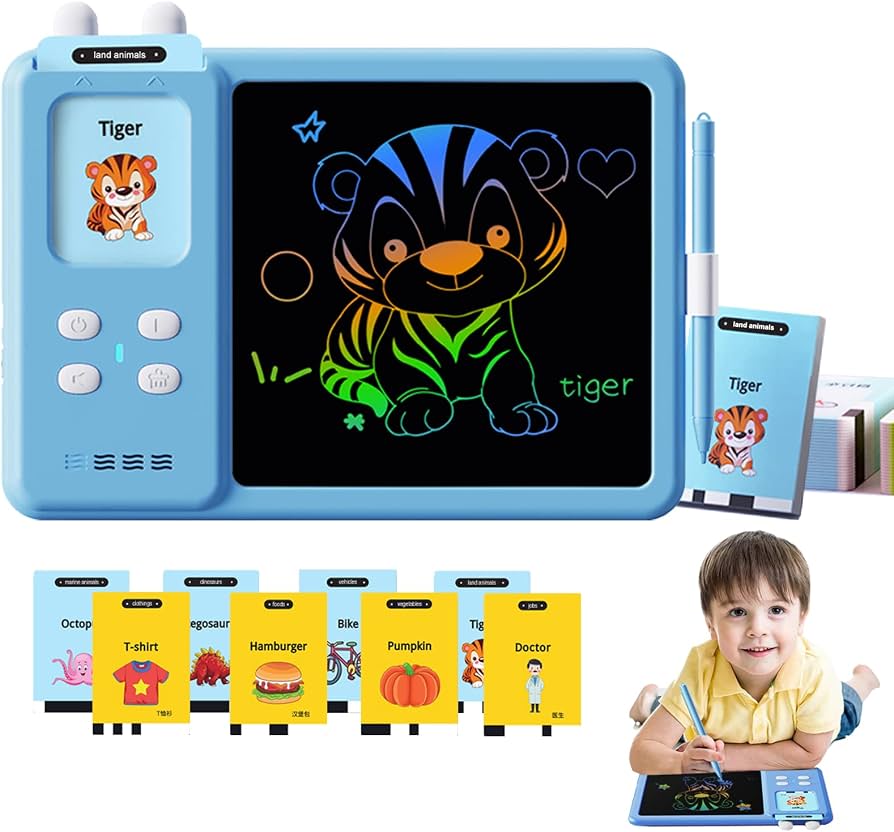
This is the piece that does the talking — the device your child will reach for first, and reach for again tomorrow. It’s the engine behind everything else in the box: without it, the cards are just cards.
A full deck, not a starter sample. Included at this size specifically so your child never runs out of something new to discover.
Built directly into the reader, this is where listening turns into doing — a space to trace, write, and draw, which is a completely different kind of learning than listening alone provides.
A proper tool sized for small hands, rather than whatever pen happens to be lying around the house — which makes the writing tablet something they can actually use comfortably from day one.
The difference between a toy that’s ready when they want it and one that’s dead in a drawer at the worst possible moment.
If included, a simple guide walks you through getting started, so there’s no trial and error before the first real session.
Every piece here earns its place in the box — nothing is filler, and nothing extra needs to be sourced before your child can start. The reader gives the cards a voice. The cards give the reader something to say. The tablet gives all of it somewhere to go beyond listening. The stylus makes that tablet usable from the very first try. And the charging cable means the only thing standing between opening the box and your child’s first session is a few minutes of charge time. Together, it’s not six separate items — it’s one complete experience, ready to go.
Nobody has to convince a child to press a button and hear a word back. That’s fun that happens to teach something along the way — the kind of learning that sticks without a fight.
Some of the best parent-child moments are the small ones — five minutes on the floor going through a stack of cards together. This gives you an easy reason to have more of them.
No manual to read cover to cover, no complicated settings. Insert a card, and it works — your child is playing within seconds of opening the box.
Car rides, family visits, waiting rooms — it solves the “what do I bring to keep them busy” question, without reaching for a phone.
Fewer people hand over something that’s still being used weeks later. This one keeps earning its place, occasion after occasion.
No notebooks to replace, no ink, no consumable parts to reorder — what you pay for once is what you’ll be using for a long time to come.
Because there’s always a new card, a new word, or a blank screen to fill, children tend to keep coming back to this one instead of setting it aside.
No red pen, no “wrong answer” buzzer. Every attempt is just another round to play — letting a child’s natural curiosity lead.
A reader, a full deck of cards, a writing tablet, a stylus, and everything needed to charge it — bundled as one purchase instead of several.
Easy to hand over, easy to trust, easy to let a child use without supervision every single second — made to make a busy parent’s day a little easier too.